
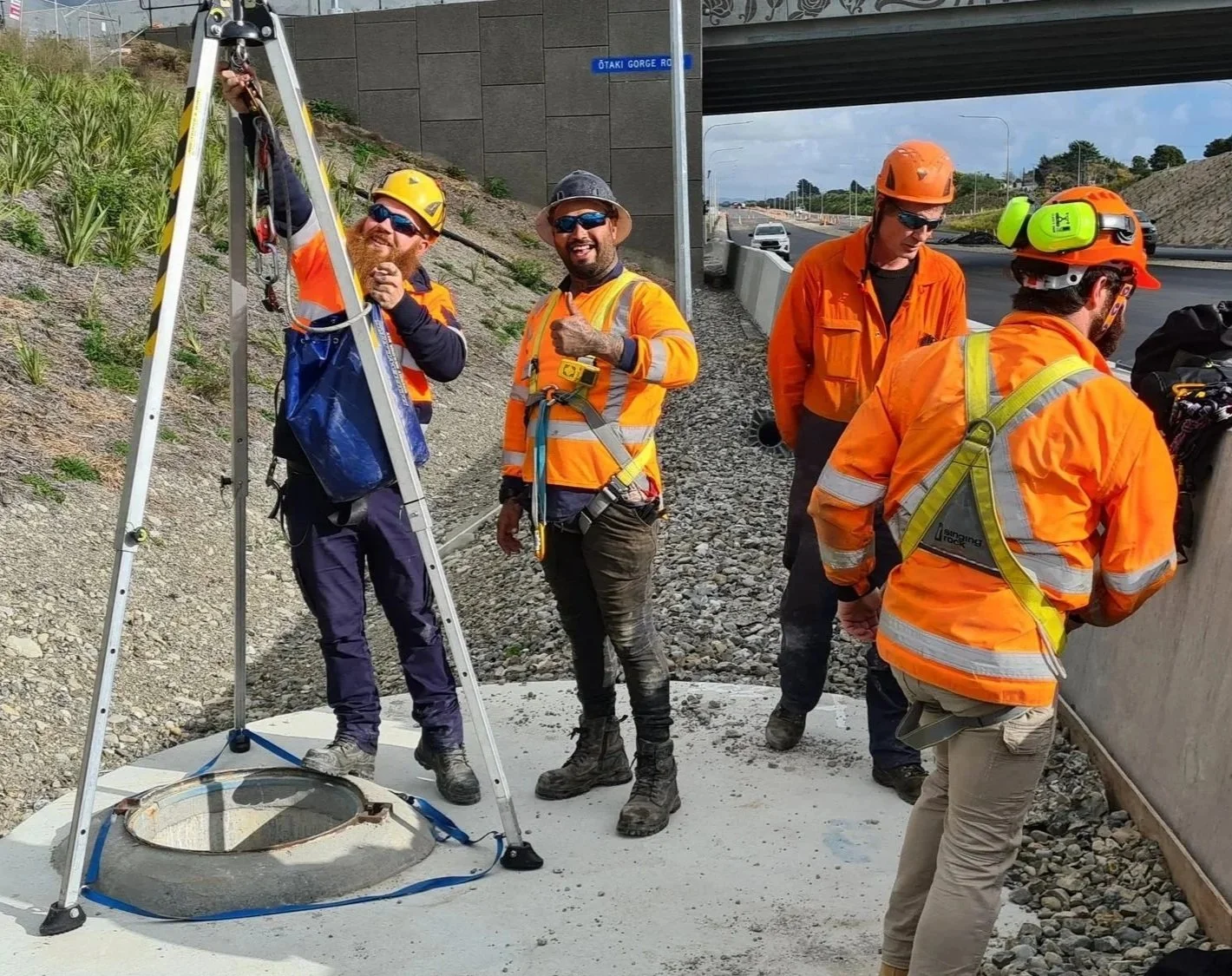
Confined Space & Gas Testing
Working, Atmospheric Testing, Planning, Rescue
One day basic, and two day advanced courses
Basic from $295 + GST
Advanced from $550 + GST
Spring special $495 + GST for the advanced course
Practical skills for confined space work
Learn to recognise confined space hazards, understand gas testing and plan safer entry through practical, hands-on training.
Our trainers bring current industry experience into every course, with one-day basic and two-day advanced course options to suit your team’s work and training needs.
Basic Confined Space
Duration: One day
Covers unit standard 18426 – Demonstrate Knowledge of Hazards Associated with Confined Spaces.
Unit standard 25510 – Operate a Gas Testing Device to Determine a Suitable Atmosphere Exists to Work Safely can be added.
Note: Trainees are advised that it makes for a very full day. The cost is $325 + GST for the basic course with gas testing included.
Advanced Confined Spaces & Gas Testing
Duration: Two days
Known as the full confined space course, this covers unit standards
18426 – Demonstrate Knowledge of Hazards Associated with Confined Spaces
25510 – Operate a Gas Testing Device to Determine a Suitable Atmosphere Exists to Work Safely
17599 – Plan a Confined Space Entry
Prices include applying the NZQA unit standards to the learners Record of Learning.
What you will learn
Our confined spaces courses cover the worker and PCBU requirements under the Health & Safety at Work Act 2015 and its associated regulations (2016); the applicable industry standard AS2865:2009 -Safe Work in Confined Spaces; and how these all fit together. An overview of the course would be the following:
Methods of entry and exit into confined spaces.
Confined space restrictions and their effect on patient recovery in an incident.
Types of gases found in common confined spaces (for example, sewers, tanks, silos, pits, process vessels, etc.)
Hazards associated with gas testing over gas monitoring.
Duties of safety personnel and the risks associated with these tasks.
Isolation of confined space hazards (lockout methods)
minimisation controls / use of PPE (and if required, Breathing Apparatus).
The courses also cover a wide range of equipment associated with confined space work and its appropriate use and maintenance.
The need for a rescue plan when working in confined spaces and their basic requirements.
Suspension trauma / intolerance, and the effect this may have on your rescue plan.
Develop a safe Confined Space Permit for the specified task.
Benefits of gas monitoring or gas testing associated with the specified task.
Type of gas detector required, and if only testing, the frequency of testing to be implemented.
Practical training
The one-day basic course includes a short practical introduction to confined space equipment and the capabilities and limitations of gas testing devices.
The two-day advanced course includes several confined space entries and rescue scenarios. Practical activities include:
Checking the space externally and reviewing the entry plan.
Applying isolations required by the permit.
Checking, fitting and adjusting a suitable harness.
Setting up suitable entry and exit arrangements.
Gas testing and discussing suitable monitoring and recording intervals.
Entering and exiting the space, including signing in and out.
Recording gas test results during entry.
Packing up equipment and removing isolations in accordance with the permit.
Rescue simulations give trainees opportunities to practise suitable methods of recovering someone from a confined space.
Contact us before booking to discuss any site-specific training or assessment requirements.
This course is provided through a contracting arrangement between the primary contract holder, Pacific Coast Technical Institute (PCTI), and its sub-contractor, Elite Training Services Limited