
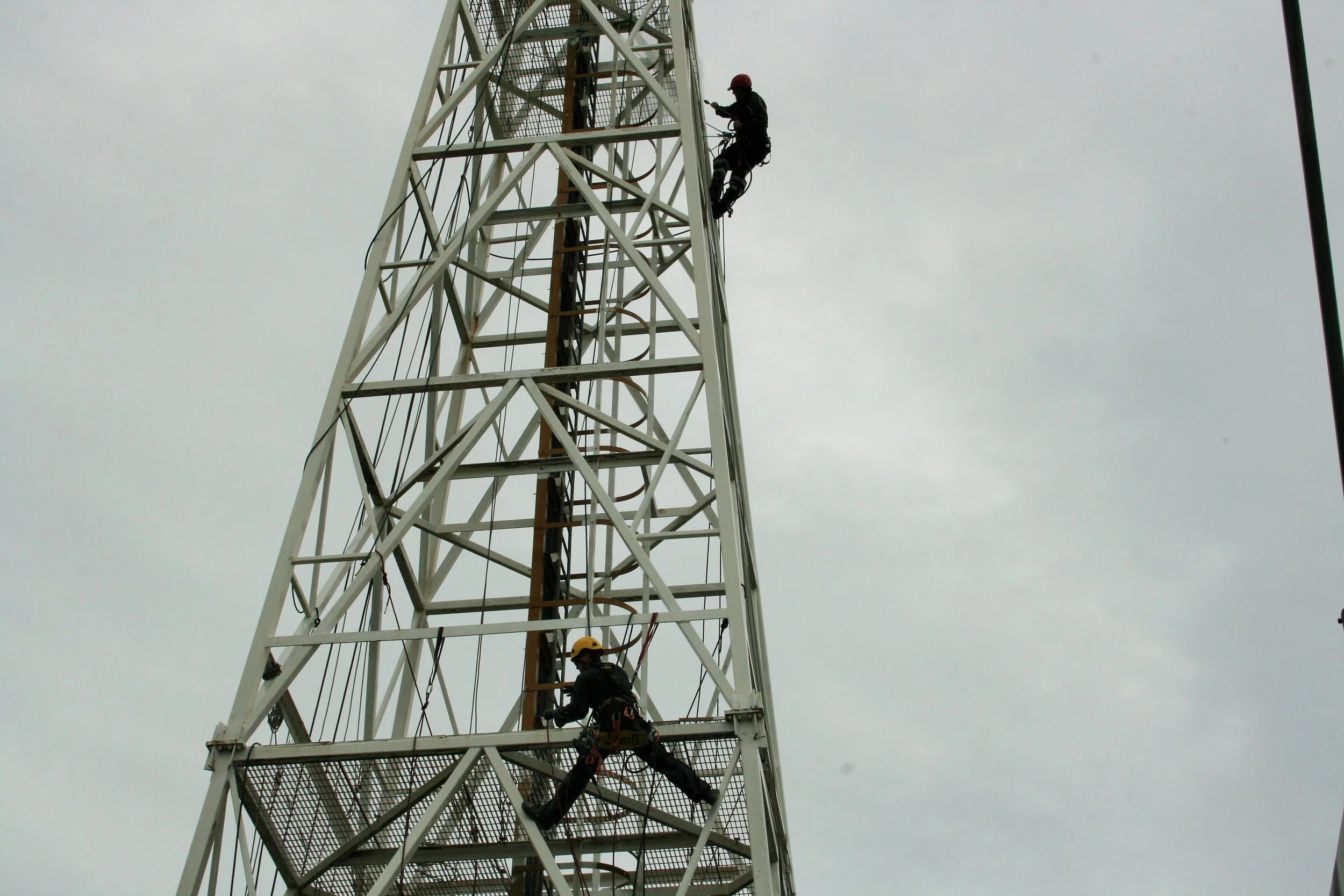
Working at Height Courses
Height Safety, Fall Arrest, and Basic Rescue Training
We have one and two-day course options available
Basic Working at Heights Course: $295 + GST (one day)
Advanced Working at Heights Course: $550 + GST Spring Discount $495 + GST (two day)
At Elite Training Services Ltd we turn height safety knowledge into action. Our goal is simple: equip your team with practical skills and real-world methods so they return from every jobsite safe and ready for the next.
Working at height carries clear risks — slips, trips, incorrect use of equipment and inadequate systems cause most incidents. We deliver focused, hands-on training that helps crews recognise hazards early and apply effective controls. Courses are taught by current industry professionals who bring live experience, proven techniques and jobsite-tested solutions into every session.
We also design, supply and install reliable fall restraint and fall arrest systems tailored to your site. From anchor points and lifelines to harnesses and rescue plans, we provide the equipment and the know-how to create a resilient safety framework so your people can work with confidence.
Change starts with competence and commitment. Partner with Elite Training Services Ltd to build a proactive safety culture that protects lives and improves productivity. Safer teams. Smarter systems. Real-world trainers. Your safety — our priority.
Our prices include the application of the NZQA Unit Standards to the learners Record of Learning
Course Details
Basic Working at Heights Course:
This one-day course covers Unit Standard 17600: Explain Safe Work Practices for Working at Height; or unit standard 23229: Use a safety harness system when working at height (can be run as a stand-alone one-day course also).
Advanced Working at Heights Course:
This is two full days, previously known as the Fall Arrest Course (additional time may be required for site-specific or specialist rescue training). The course is specifically written to include the contents of the following Unit Standards:
17600: Explain Safe Work Practices for Working at Height (one-day course when conducted by itself).
23229: Use a Safety Harness System When Working at Height (a prerequisite for 15757 and 25045).
15757: Use, Install, and Disestablish Proprietary Fall Arrest System When Working at Height (full course is $550 + GST, including NZQA credits).
Elective Unit Standard (a small fee may be charged to register these extra credits).
25045: Employ Height Safety Equipment in the Workplace (or can be run in the place of 15757 in the two-day course).
What is involved?
Our working at heights training has been designed to give trainees the appropriate theoretical and practical knowledge and awareness of height-specific hazards, including:
The Health & Safety at Work Act 2015, associated regulations and guidelines for Working at Height, and precisely what it means.
Hazards associated with different height work (for example, roofers, scaffolders, window cleaners, construction workers, builders, maintenance workers, and inspectors).
Equipment associated with safely working at heights in various practical scenarios.
Basic inspection of harnesses and heights equipment (for further, attend the full PPE Inspection course)
Hierarchy of fall arrest and fall restraint.
Fall distances versus forces exerted on the body.
Suspension trauma / Intolerance.
Isolation of height hazards versus minimisation (signage, policies, and PPE).
Simple rescue techniques from various working at height situations.
Practical Component
Both our one‑day and two‑day courses include a significant practical component, which means you will be working at height. We’ve had trainees who were surprised by this requirement, particularly those with a fear of heights. The unit standards are very clear: all trainees must complete every required task themselves — observing others is not sufficient.
As outlined in the prerequisites below, please let us know in advance if you have any concerns about your physical ability to complete the practical elements of the course.
During training, all participants will set up and use height‑safety systems and carry out basic rescue procedures for fellow trainees. Our goal is to show how straightforward safe work at height can be, with a strong focus on fall restraint as the preferred method over fall arrest.
If you’d like more detailed information about the content of each course, get in touch — we’re happy to talk through the specifics with you.
Benefits
Many clients give positive feedback after training, sometimes months later. Workers often raise safety standards at work. There’s also a boost in productivity from better fall arrest knowledge and trust in the equipment. When employees believe in their gear, they focus more on their tasks.
Prerequisites:
The trainee must not have any blood circulation issues or infections of major organs –for example, low blood pressure or bladder and kidney infections. All trainees will work in harnesses and be suspended for a short period to give them an understanding of the requirements for a rescue system to be in place at all times. Circulation issues can lessen the time taken for ‘suspension trauma’ (orthostatic intolerance) to make the person lose consciousness and not be capable of self-rescue.
Suspension Trauma
Let’s get through some myths that appear rampant around when someone is suspended motionless in a harness:
Gravity pulls blood into the legs.
The leg muscles can’t contract effectively, because the person isn’t standing or moving (feet being able to push against a surface).
Without that “muscle pump”, then the venous return to the heart drops.
The heart has less blood to circulate, so blood pressure falls.
The brain receives less oxygenated blood, leading to:
dizziness
nausea
fainting (syncope)
This is the same mechanism behind soldiers fainting on parade grounds, or people passing out after standing still too long. The technical term is “orthostatic intolerance”.
Why Fainting Is Dangerous in a Harness
Fainting itself isn’t the problem. The danger comes from:
Airway obstruction if the head slumps forward
Continued pooling of blood in the legs while unconscious
Reduced cardiac output that can progress to shock
Potential for cardiac arrest if the situation continues long enough
This is why rapid rescue is essential even though the “10‑minute death” idea is highly inaccurate.
Why the “10‑Minute Rule” Exists
The idea that someone “dies in 10 minutes” is a myth, but it has a kernel of truth:
Rope access training requires workers to be able to perform a rescue within 10 minutes (this was part of the Pass:Fail assessment criteria that was decided when the AS/NZS4488:1997 was written).
The goal is to reach the suspended worker before they lose consciousness, because a conscious casualty can assist in their rescue, and is easier to manage.
Research and real-world cases show that loss of consciousness can take 30–45 minutes or more, depending on the harness type, the point of attachment on their harness, the person’s physiology, and their ability to move their legs, and what they were doing prior to the fall / hanging in the harness occured (so many factors!).
So the 10‑minute benchmark is a training standard, not a biological limit.
Yes, there is apparently one “test” case overseas, where a person was hung from the rear attachment of a harness to ascertain the time for a person to pass out, and was “apparently” found dead after six minutes (this is found mentioned by the Resuscitation Council) …. But, the problem is that we have absolutely no idea if this is true or a myth, as there is no documentation or background that we can find to “fact-check” this. eg. What underlying issues did this one person have? and was it six minutes, or 60 minutes? Why would he have been left hanging with no other person around? This one apparent case cannot form the basis of rescue time, or we should simply live in fear, and never walk out the door of our house (as there is documented proof that people have slipped over and died before -on flat ground)
If we start making people overly alarmed by these rumors, we risk inciting panic. That panic could end up causing more harm than if we take a bit more time to extricate the victim safely and methodically.
This course is provided through a contracting arrangement between the primary contract holder, Pacific Coast Technical Institute (PCTI), and it’s sub-contractor, Elite Training Services Limited